



How Long Does Tea Stay Hot in a Glass Teapot?
TEATIME NOTES
Find tips, recipes, and articles to increase your delight and enjoyment of tea.
Search
How Long Does Tea Stay Hot in a Glass Teapot?

The honest answer — plus the expert tricks that change everything.
If you've ever Googled this question, you've probably landed on a vague answer like "it depends" and closed the tab more frustrated than when you started. So let's be direct.
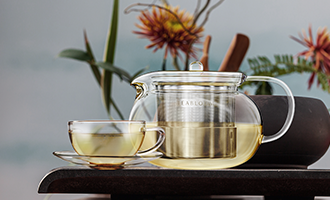
Without any accessories, a glass teapot will keep your tea at a comfortable drinking temperature for about 30–45 minutes. Add a candle or tea warmer underneath, and you're looking at 1.5 to 2+ hours of consistent warmth. Wrap it in an insulating tea cozy, and you'll get somewhere in between — around 45–60 minutes.
That's the honest answer. But the more interesting question is why — and what you can do about it.
Why Glass Loses Heat Faster Than Other Materials
Glass is not a great insulator. It's simply a physical fact, and no amount of marketing language changes it. Compared to cast iron or thick-walled ceramic, borosilicate glass conducts heat away from your tea more readily.
But here's what most articles skip over entirely: heat retention is only one dimension of a teapot's performance. And for many people — especially those making health-conscious choices — it's not even the most important one.
Cast iron teapots hold heat beautifully. They also carry a risk that isn't discussed nearly enough: many ceramic glazes, crystal glassware, and even some cast iron enamels have historically contained lead, cadmium, or other heavy metals. Health-conscious customers are increasingly aware of this, and rightfully so.
Borosilicate glass — the material Teabloom uses across its entire lineup — is:
- ✅ Lead-safe
- ✅ Cadmium-safe
- ✅ Non-toxic and inert — nothing leaches into your tea, ever
- ✅ Food-safe by nature, not just by certification
So yes, glass loses heat faster. But it's also the only material that asks nothing of you in return.
Single-Wall vs. Double-Wall Glass: A Meaningful Difference
Not all glass teapots are equal when it comes to heat retention. The construction matters significantly.
Double-wall glass stays cool on the outside while keeping tea hot within.
| Single-Wall | Double-Wall | |
|---|---|---|
| Heat retention | 30–45 min | 60–90 min |
| Outside temperature | Gets hot to the touch | Stays cool to the touch |
| Condensation | Yes | No |
| Weight | Lighter | Slightly heavier |
| Visual clarity | Crystal clear | Slight distortion |
| Price | Lower | Higher |
The double-wall design works by trapping a layer of air between two glass surfaces — that air acts as insulation, slowing the transfer of heat outward. It's the same principle behind a double-paned window or a vacuum flask, just in an elegant glass form.
If heat retention is your top priority, here are Teabloom's best insulated options:
- 🏆 Milano Insulated Glass Tea Steeper — double-walled, beautifully designed, keeps tea hot significantly longer
- 🏆 Louvre Insulated French Press — double-walled with exceptional heat performance for 4–5 cups
The Warmer Is Not an Accessory. It's the Answer.
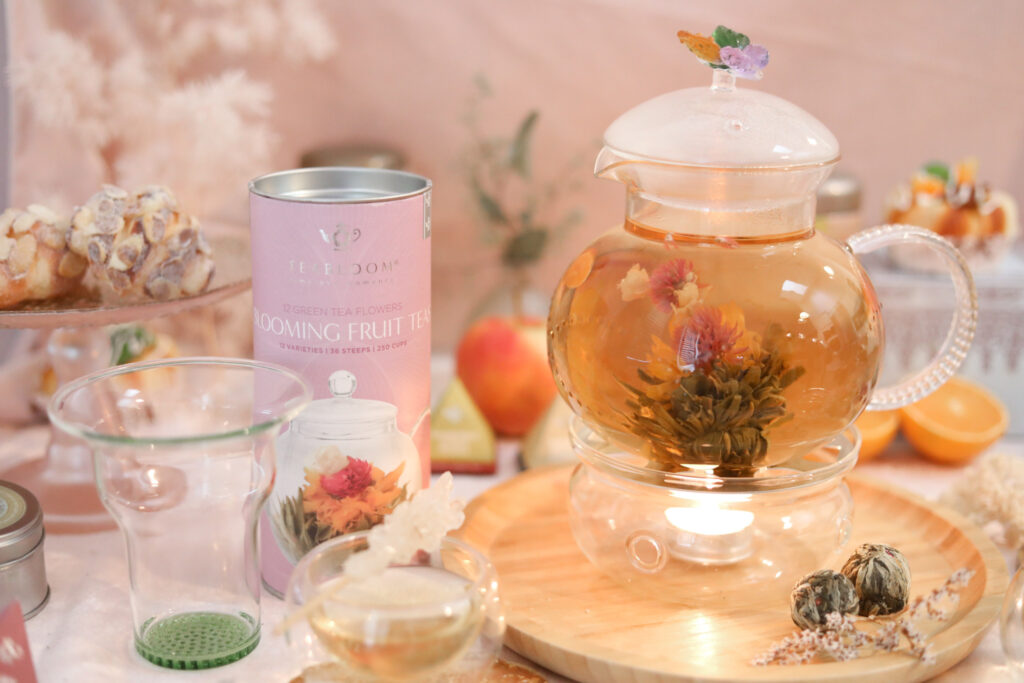
A candle or tea warmer placed beneath a glass teapot doesn't just slow the cooling — it actively maintains temperature. We're talking about 1.5 to 2+ hours of tea at a consistent, enjoyable drinking temperature. That transforms the experience entirely.
Teabloom's own warmer copy says it best: "Now you can drink your tea without rushing to finish it before it cools off." If you've ever felt that quiet pressure to drain your cup before it goes cold — this is the answer.
If you use a glass teapot regularly and feel any frustration about heat, a warmer isn't a luxury add-on. It's the practical solution to glass's one real limitation.
👉 Browse Teabloom's tea warmers here
What Most People Get Wrong (And It's Costing Them Heat)
The teapot rarely deserves the blame. In most cases, heat is being lost before the first sip even happens — through habits most people don't know to question.
1. Not Pre-Warming the Pot
Pouring boiling water into a cold glass teapot immediately drops the temperature by 10–15°F as the glass absorbs heat. A 30-second rinse with hot water before brewing makes a noticeable difference. Almost no one does this — because almost no one told them to.
2. Leaving the Lid Off
Heat escapes rapidly through an open spout and top. A lid alone can extend heat retention by 15–20 minutes on its own. Customers often peek at their tea to check the color and forget to put the lid back.
3. Underestimating the Room
A teapot in a cold kitchen in winter loses heat dramatically faster than the same pot in a warm room. Cold stone or marble countertops are especially problematic — they actively pull heat from the pot base. Air conditioning in summer has a similar effect.
4. Brewing Less Than a Full Pot
A half-full teapot loses heat faster than a full one. Less liquid means less thermal mass — less stored energy to hold onto. If you regularly brew small amounts and find the tea cools quickly, this is likely a major contributor.
5. Using the Warmer Only for Guests
If you own a tea warmer and save it for "special occasions," you're missing the point. It's designed for everyday use. It's the solution to glass's single weakness, not a decorative accessory.
6. Pouring Too Often in Small Amounts
Every pour releases steam and introduces cooler air into the pot. Frequent small pours cool the remaining tea faster than pouring full cups less often.
The Part Most Blogs Miss: Cooling Down Can Be a Feature
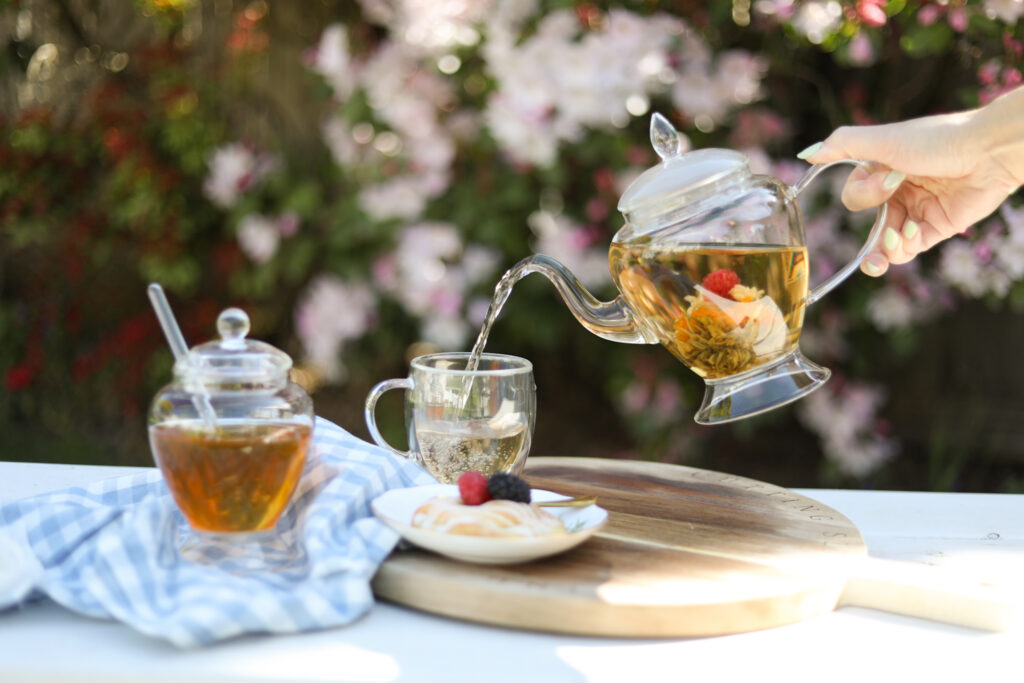
Flowering and blooming teas are green tea-based — meaning glass's natural cooling curve is actually ideal for them.
This is the most counterintuitive and genuinely useful insight about glass teapots — and almost no one talks about it.
For some teas, a glass teapot that cools naturally is actually ideal.
Green tea is notoriously sensitive to heat. Boiling water scalds the leaves and produces a bitter, astringent cup. The ideal steeping temperature is 160–180°F — and a glass teapot that naturally cools slightly from the moment hot water is poured protects the tea rather than undermining it.
For green tea drinkers, glass's tendency to lose heat isn't a flaw. It's a feature.
| Tea Type | Ideal Temp | Glass Teapot | Verdict |
|---|---|---|---|
| Black tea | 200–212°F | Cools too fast | 🕯️ Use a warmer |
| Pu-erh | 200–212°F | Cools too fast | 🕯️ Use a warmer |
| Dark oolong | 190–200°F | Marginal | 🕯️ Warmer helps |
| Herbal / Rooibos | 200–212°F | Cools too fast | 🕯️ Use a warmer |
| Light oolong | 175–185°F | Good fit | ✅ Fine without warmer |
| Green tea | 160–180°F | Natural cooling is ideal | ✅ No warmer needed |
| White tea | 150–170°F | Natural cooling is ideal | ✅ No warmer needed |
| Flowering tea | 160–180°F | Perfect match | ✅ No warmer needed |
This is especially relevant for Teabloom's signature flowering and blooming teas — all green tea-based — where the visual experience, the meditative ritual, and the lower steeping temperatures align perfectly with what glass naturally does.
The Case for Glass in Everyday Life
Some people read about heat retention and conclude: "Glass teapots just aren't practical." That conclusion misunderstands what "practical" means.
Practical means frictionless. It means the thing you reach for without thinking, clean without stress, and trust without hesitation.
By that definition, glass is the most practical teapot material available.
Cast iron and ceramic carry hidden daily costs:
- Staining over time, requiring dedicated cleaning
- Flavor memory — porous materials absorb previous brews, so your chamomile whispers into your Earl Grey
- Rust, in uncoated cast iron, if not dried perfectly every time
- Opacity — you can't see when your tea is ready, so you guess or use a timer
- Weight — cast iron teapots are genuinely heavy when full
Glass eliminates every one of these daily annoyances — and adds things nothing else can:
- Watch your tea steep and pull the infuser at exactly the right color. No timers, no bitter surprises.
- Zero flavor carryover. Every brew starts completely clean.
- Effortless cleaning. Rinse and done. Dishwasher safe.
- Stovetop and microwave safe. Borosilicate glass goes from fridge to flame — versatility cast iron and ceramic can't match.
- It makes you better at making tea. Watching the color develop trains your eye over time. A daily habit becomes a craft.
Quick Reference: How Long Does Tea Stay Hot?
| Setup | Heat Retention |
|---|---|
| Single-wall glass teapot, no accessories | 30–45 minutes |
| Single-wall with tea cozy | 45–60 minutes |
| Double-wall glass teapot | 60–90 minutes |
| Any glass teapot with candle/tea warmer | 1.5–2+ hours |
The Bottom Line
Most purchase decisions in the wellness and kitchen space involve a quiet sacrifice. The healthy option is often plain, clinical, or joyless. The beautiful option usually has a hidden catch — a glaze you can't quite trust, a surface that absorbs things you'd rather not think about.
Teabloom's borosilicate glass collapses that trade-off completely. SGS-verified lead-free. Cadmium-free. Non-toxic by nature. And also the most visually stunning way to make tea.
You don't have to talk yourself into it. You don't have to accept a compromise. Every reason points in the same direction.
That's not excitement. It's something quieter and more lasting.
It's relief.
Shop Teabloom Glass Teapots
- 🏆 Best for heat retention: Milano Insulated Glass Tea Steeper
- 🏆 Best insulated press: Louvre Insulated French Press
- 🕯️ Complete any teapot: Teabloom Tea Warmers


Share your thoughts